Someone asked me one day, what about recording an emotion, they said. Oh, let’s have a try.

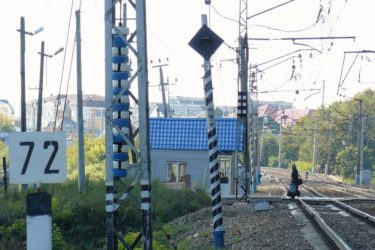
First, is the sound of love. A four-seconds piece of conversation heard through a maternity hospital window, (Kirovka area, Sergiyev Posad) – do not dare to hear more. All we need here is the sound of goodbuy. It’s 9 pm, visitors are not allowed, she stays in with her baby, born or yet to be born, and he walks home in the wind, as you may hear.

Необходимо обновить Adobe Flash Player

——————————————————————————————————————————————

Then, the sound of apathy. Or neglect. A weary sales woman is nibbling sunflower seeds behind the counter at the shabby grocery store (Vorobyovka, Sergiyev Posad). A common pastime for the many, not so common for a hard-working shop assistant.

Необходимо обновить Adobe Flash Player

——————————————————————————————————————————————

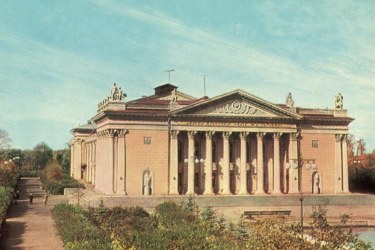
And finally, a few giggles. The audience hold their breath as they watch the performance at the Teatralny Kovcheg, a local theatre in Rabochka, Sergiyev Posad. The actress is disappearing into a large box where presumably her cocktail dresses are stored – just to emerge from behind the curtain in the full splendour.

Необходимо обновить Adobe Flash Player

——————————————————————————————————————————————

Such a nice idea! And what is yours?

Recorded in 2010-2011 (CA-14 omni)
Published April 23rd, 2011.

Опубликовать в twitter.com Опубликовать в livejournal.com

This is the least likely to be heard in a monastery as one might suggest – a marching squad accompanied by one!-one!-one!two!three! Russian military chant. They seem to be the Peresvet Club boys squad, a Trinity-Sergius monastery affiliated after-school educational institution. Some may regard the club as the orthodox scouts but they may not feel very comfortable being compared to the western type scouts. Also heard are the book shop customers and slamming doors at the end of the recording.

Необходимо обновить Adobe Flash Player

Recorded April 4th, 2011 (CA-14 omni)
Published April 7th, 2011.

Опубликовать в twitter.com Опубликовать в livejournal.com

Another month, another colour, another story. We are led by Olga Romashova, a local poet and an ecologist at the Moscow’s Vorobyovy Gory wildlife reserve park. But no poetry readings or lectures on nature this time – Olga speaks of the years she and her family have spent in that area that borders with the city centre. Delivered in her inimitable style are the reminiscences of the sounds of the general elections Olga went to with her grandparents, ‘natural economy’ gifts – vodka bottles given to the plumbers (this could be a more efficient way to get rid of the plumbing issues in the Soviet times), written school tests burned to ashes. Also, debunking the old local myth that defames Rabotchiy as of one the most crime-ridden area of Sergiyev Posad.

Необходимо обновить Adobe Flash Player

All sounds were gathered in the area. Here are the key non-verbal sounds featured in this recording:

  • car-alarm, Berounskaya street (00.00 – 01.55)
  • jackdaws, sparrows and pigeons, Krasnoflotskaya street (02.45 – 03.40)
  • police emergency call street button, Valovaya street (03.50 – 04.25)
  • train from Yaroslavl to Moscow, bakery gates, Krasnoflotskaya st (04.25 – 04.40)
  • Krasny (Red) shop ambience – Karla Libknekhta street (06.35 – 07.50)
  • radio set out of a shop window to attract customers, Valovaya st (08.25 – 08.40)
  • Recording locations: Rabotchiy, Kamenniy
    Recording date: February 26, 27th, 2011
    Related period: 1980s-2000s
    Sounds: stereo, binaural stereo

    Download as wav
    Part of Sergiyev Posad Sound Map.

    Опубликовать в twitter.com Опубликовать в livejournal.com

    Berlin-based Lutta and Gunnar Saifulin revisit Sergiyev Posad, Lutta’s hometown. In this episode we listen to the sounds of the relatively new residential area known as Uglitch where Lutta has been living before relocating to Germany and marrying Gunnar.

    This soundwalk was recorded during the couple’s stay in Russia in the winter of 2010/2011. Lutta is reflecting upon the changing landscape of the familiar place while Gunnar recounts his experience as a German speaker finding himself among the Russians and the Russian sounds. The topics range from the old and noisy cars that are still around, the children’s sleighing and whether the snow sounds different in different countries to the modern-day urban alienation and the very own lingo of the Russian media.

    Необходимо обновить Adobe Flash Player

    Recording locations: Uglitch
    Recording date: January 6, 30th, 2011
    Related period: 1990-2000′s
    Sounds: stereo, binaural stereo

    Download as wav
    Part of Sergiyev Posad Sound Map.

    Опубликовать в twitter.com Опубликовать в livejournal.com

    Sounds of the isolated Kozikha cottage area more formally known as Kozia Gorka (literally meaning the Goat’s Hillock) as told by the local historian Alexander Lunevsky.

    Accompanied by the recurring sounds of the crackling fire of the traditional Russian stove, distant trains and squeaky snow, this audiowalk celebrates the characteristics of living a secluded life where everyday sounds acquire a whole new meaning. Contains binaural audio.

    Необходимо обновить Adobe Flash Player

    Recording locations: Kozia Gorka, Krasyukovka
    Recording date: December 22, 26, 31st, 2010
    Related period: 1940′s-2000′s
    Sounds: stereo, binaural stereo

    Download as wav
    Part of Sergiyev Posad Sound Map.

    Опубликовать в twitter.com Опубликовать в livejournal.com

    Just before Christmas I’ve got a message from a reader from Naltchik suggesting a shortwave band radio recording. Gotcha! This is the RTÉ Radio 1 from Ireland, one of the first full-service broadcasters in the world.

    This particular piece of audio has traveled all over the planet – from the Dublin studio to the relay station in Meyerton, South Africa, from there to Veliky Novgorod, Russia where I recorded it while on holidays. Non-binaural recording, headphones are not required.

    Необходимо обновить Adobe Flash Player

    This letter brought back memories of something I was completely carried away by. I will get back to this later but now let’s start start with this song from the late 70s. Do you remember this?

    It wasn’t just video that killed the Golden Age of radio stars of course – we have lots more ways to listen to sounds from far away (including the old-time radio dramas) these days so that the whole idea of transmitting audio via some electronic medium is here to stay. But it would never be the same for sure, and what really makes the difference are the side effects caused by the carrier drawbacks.

    Ah those lovely drawbacks! Are we the last generation to remember say – the buzz of the utterly imperfect, equally enigmatic, unpredictable and charming shortwave radio? It was quite a proper medium whose popularity was doubled and subsequently diminished by the number of external circumstances.

    Growing up behind (or outside?) the Iron Curtain brought with it its own joys. Just like the shortwave bands of the old Okean radio. The whole world was packed into this wooden box with the drum-like rotating band switch. The languages you’ve never heard before, the pop charts revelations (its the mid-late-80s, mind you), the mysterious number stations, ham radio – which if you didn’t have the lower/upper SSB (single-side band) knob on your machine sounded like an alien speech, and the static – which of course wasn’t the static but the real aliens trying to get in touch with the mankind.

    Tuning to your favourite show has become much easier with the Internet – it’s all about the ‘click of a button’, like they say, a true cliché of the modern days. But when the click is done the one thing is clearly missing, the presence of an intimate friend somewhere near. Radio was my best friend for many years. It wasn’t just listening – it was a ritual, resulting in tons of not-so-necessary information about the dramatic changes in the French government, or some knowledge of Romanian steel industry, or really nice samples of South Korean hip-hop. Their northern counterparts played nothing but ardent revolutionary songs on some weird badly-modulated off-band frequencies.

    Many radio stations have put an end to their international broadcasts later on – the external services of Swiss, Austrian or Norwegian radio are among those that are no longer can be heard, but I still could easily find familiar voices or idents of many stations from those era that has moved over to the Internet.

    They are still good, and they are not to blame that it doesn’t feel like they’re speaking to you now anymore. The tone gets clearer, no hum, no static, but it’s just as confusing as listening to all those so called ‘remastered’ audio tracks of old movies and cartoons sacrificed by the TV perfectionist bosses itching for the ‘modern’ sound to be found everywhere.

    Why is that? It is really difficult to explain – just as explaining the feel of rewinding C-90 cassette spinning around a pen or pencil as you are trying to save the Walkman’s pre-alcaline and non-yet-rechargable batteries power. And does one on the verge of going to rant about modern life have to explain?

    As to the RTÉ recording I have started with – there’s a minute-long gap in this shortwave transmission, not a very uncommon thing in the world of shortwave radio where the stations are dealing not only with complicated transmitters and huge antennas but with enormous distances between the studio and the relay station. Noise and fading are natural environment and aren’t something listeners would be really angry with. Signals may also disappear, leaving you face to face with this gurgling and hissing universe where voices and comets are put on a par.

    Recorded July 2nd 2010 (Grundig YB-80 analogue output)

    Published January 7th, 2011.

    Опубликовать в twitter.com Опубликовать в livejournal.com

    From the 16th century onwards the town of Sergiyev Posad, unofficially nicknamed the Toy Capital of Russia, was boosted by the toy making and trading tradition. That was largely due to the existence of the local toy-making crafts and industries scattered around the town and the additional sales opportunities provided by the large and steady numbers of pilgrims to the Trinity-Sergius monastery. Out of a sudden, the DIY toy making was revived in the 1990s when making and selling matryoshkas (collapsible Russian dolls) helped many families to survive the rough times.

    The making of a toy requires a good chunk of linden tree, a sharp knife and some skills passed from generation to generation. Now, the toy-making is taught in two colleges in Abramtsevo and Bogorodskoye and everyone is invited to join in.

    The first sound recording was made in Bogorodskoye – once a small village that grew into a large hydro-power plant site, and a home to the toy handicraft of the same name. This is Ilya Polsky, the local carver making first cuts into the linden chunk long before the initial outlines begin to appear.

    Необходимо обновить Adobe Flash Player

    Next is the sound that comes from a finished item. Sergiyev Posad Toy Museum director Alexander Grekov explains the way the wooden toy-hens and toy-smiths work.

    Необходимо обновить Adobe Flash Player

    Recorded August 8th/July 7th, 2010 (CA-14 omni/SP-TFB-2)
    Published December 20th, 2010.
    Photo by _SD_. Go and wed!

    Опубликовать в twitter.com Опубликовать в livejournal.com